
Historical Boots
Surviving early American boots used as references for studying proportions, wear, materials, and construction.
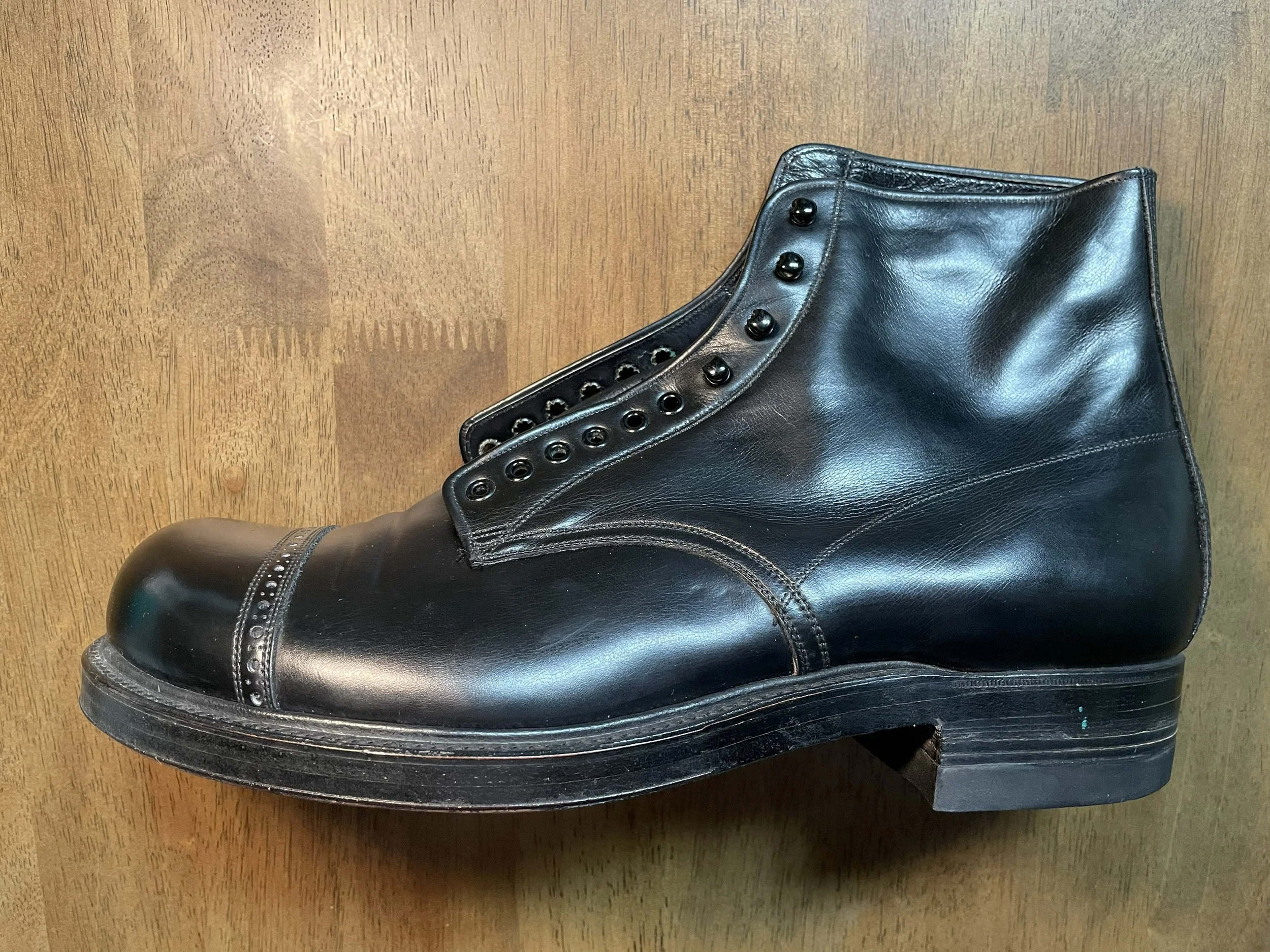
Morse & Rogers Sundial boot, c. 1930s. A useful reference for studying early American boot proportions, including the toe shape, waist, and heel balance.
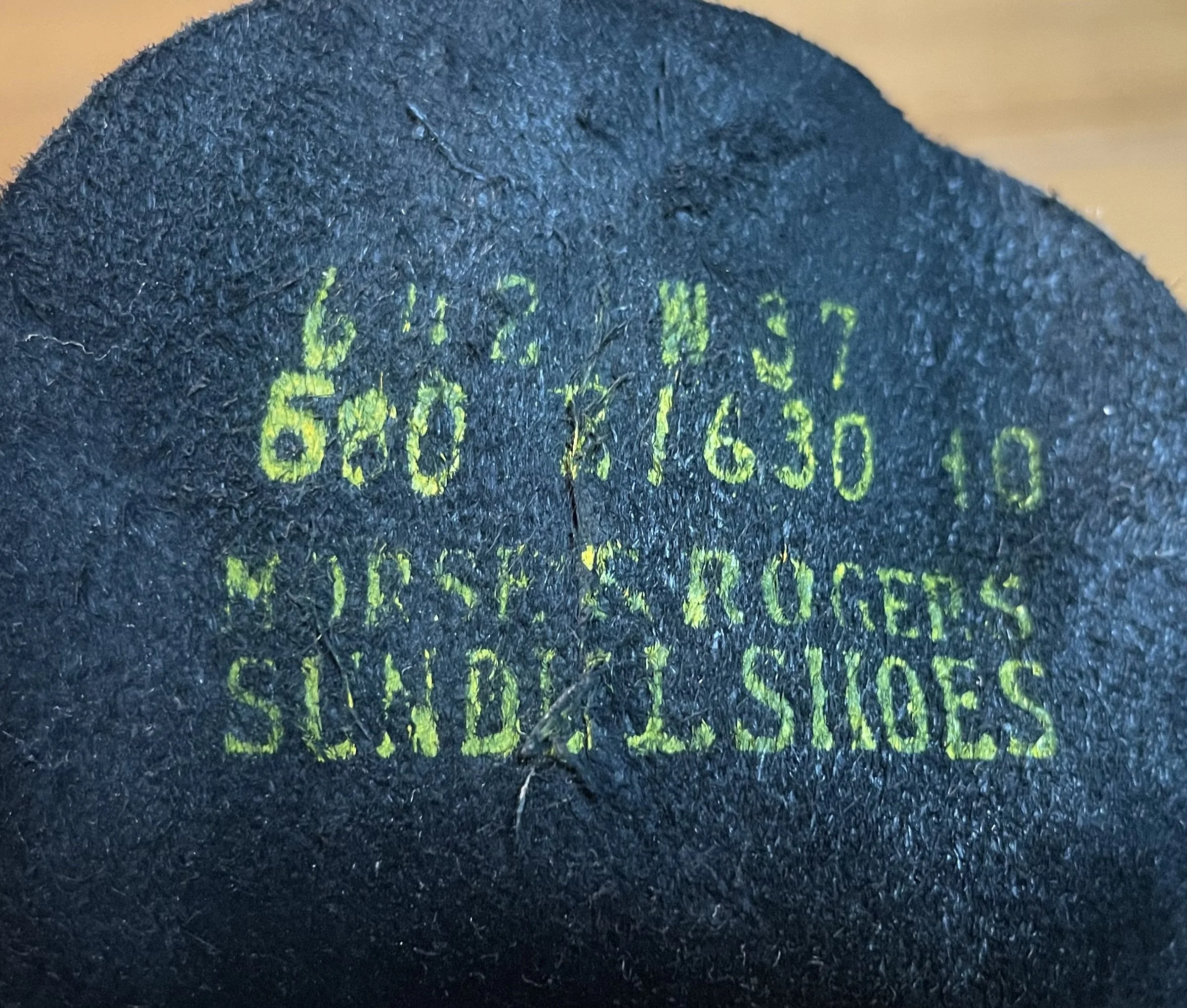
Tongue marking on the Morse & Rogers Sundial boot, showing the maker name, Sundial Shoes marking, and size notation.
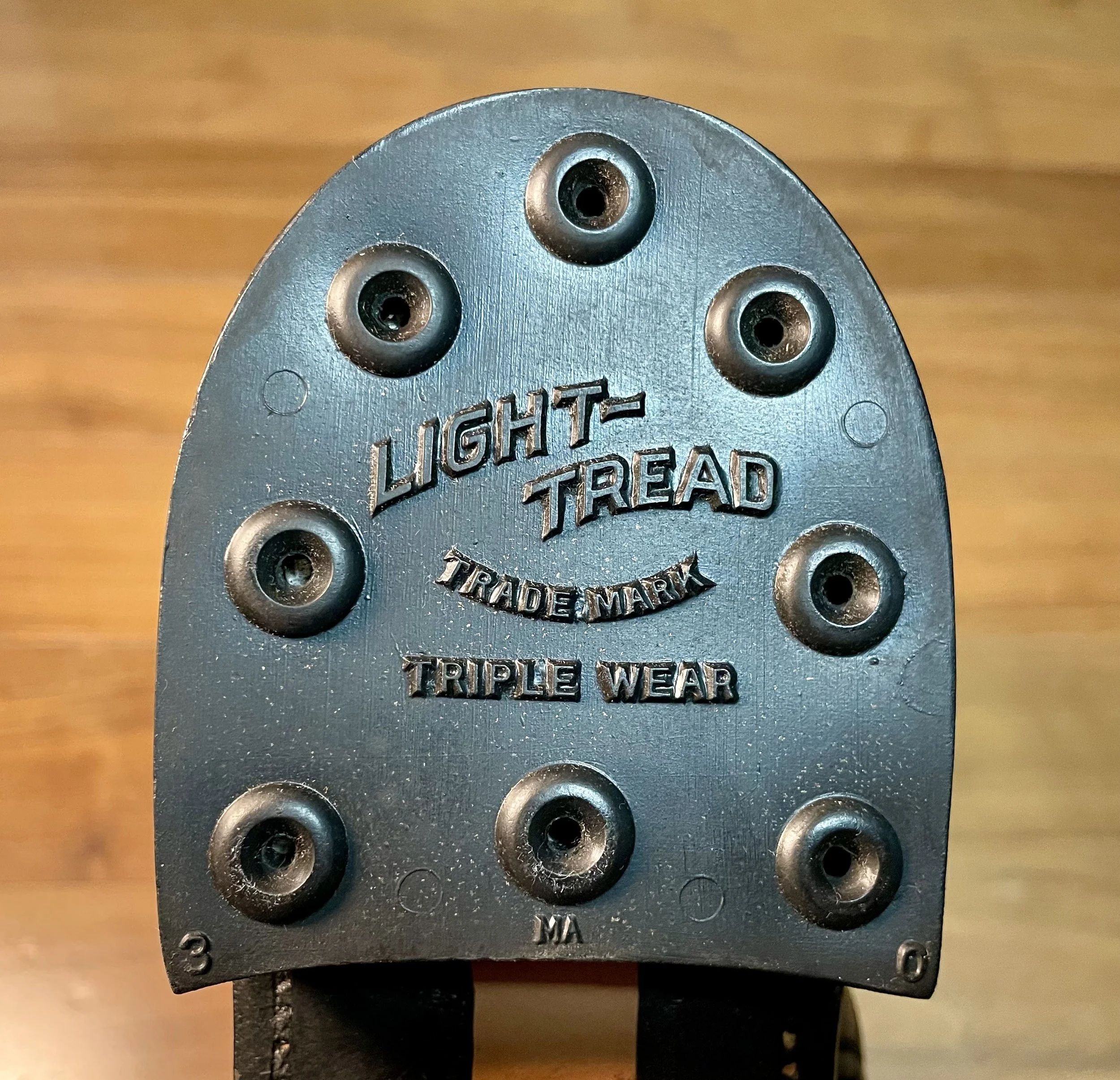
Heel detail of the Morse & Rogers Sundial Munson last boot, showing the branded rubber heel and nail layout.
E. T. Wright U.S. Navy boot, from 1918 or 1919. An early military boot reference with a restrained profile and period-specific construction details.
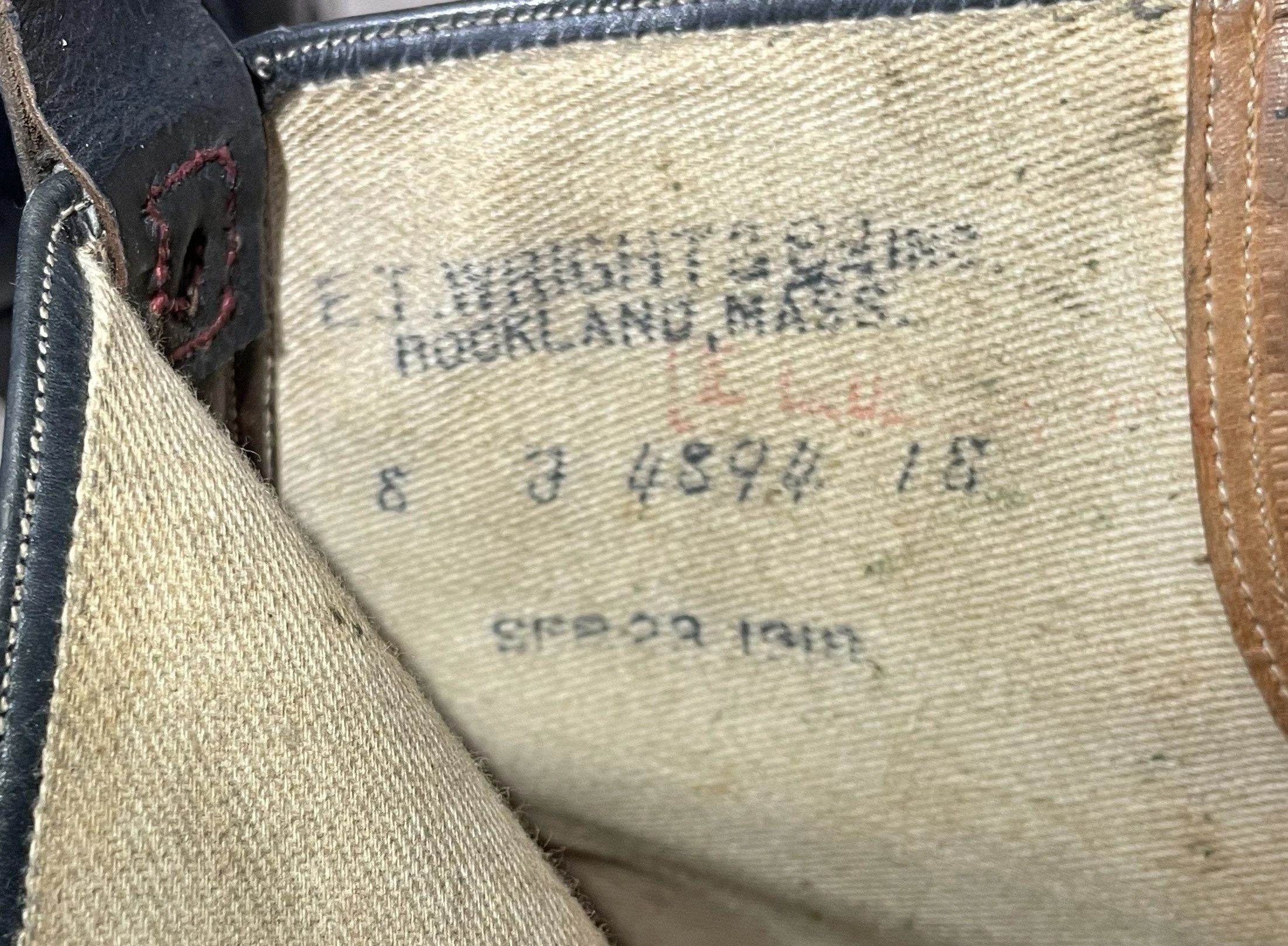
Interior lining stamp of the E. T. Wright U.S. Navy boot, showing the maker, size, and contract/manufacturing markings.
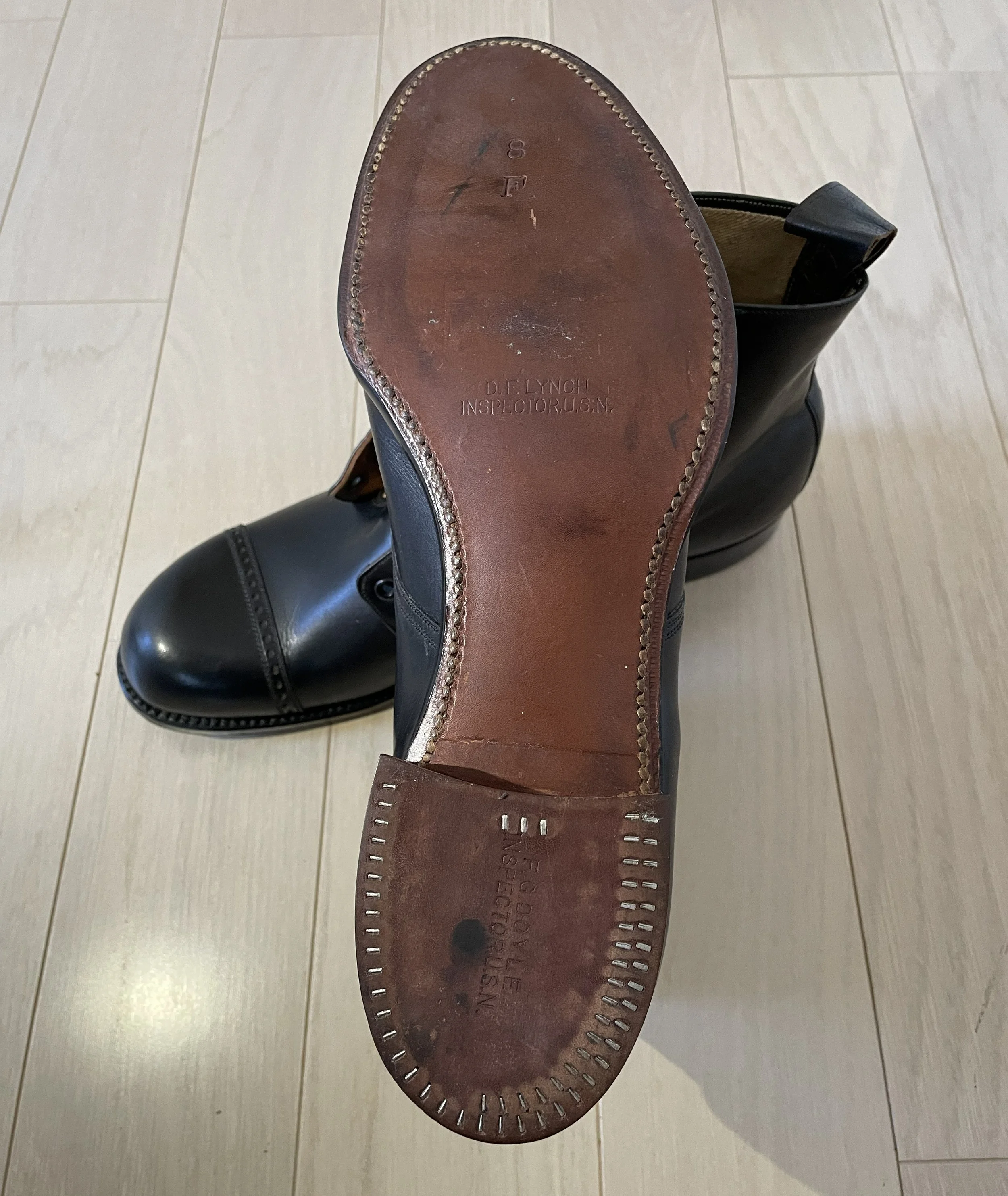
Outsole marking on the E. T. Wright U.S. Navy boot, preserving stamped production details from the original sole.
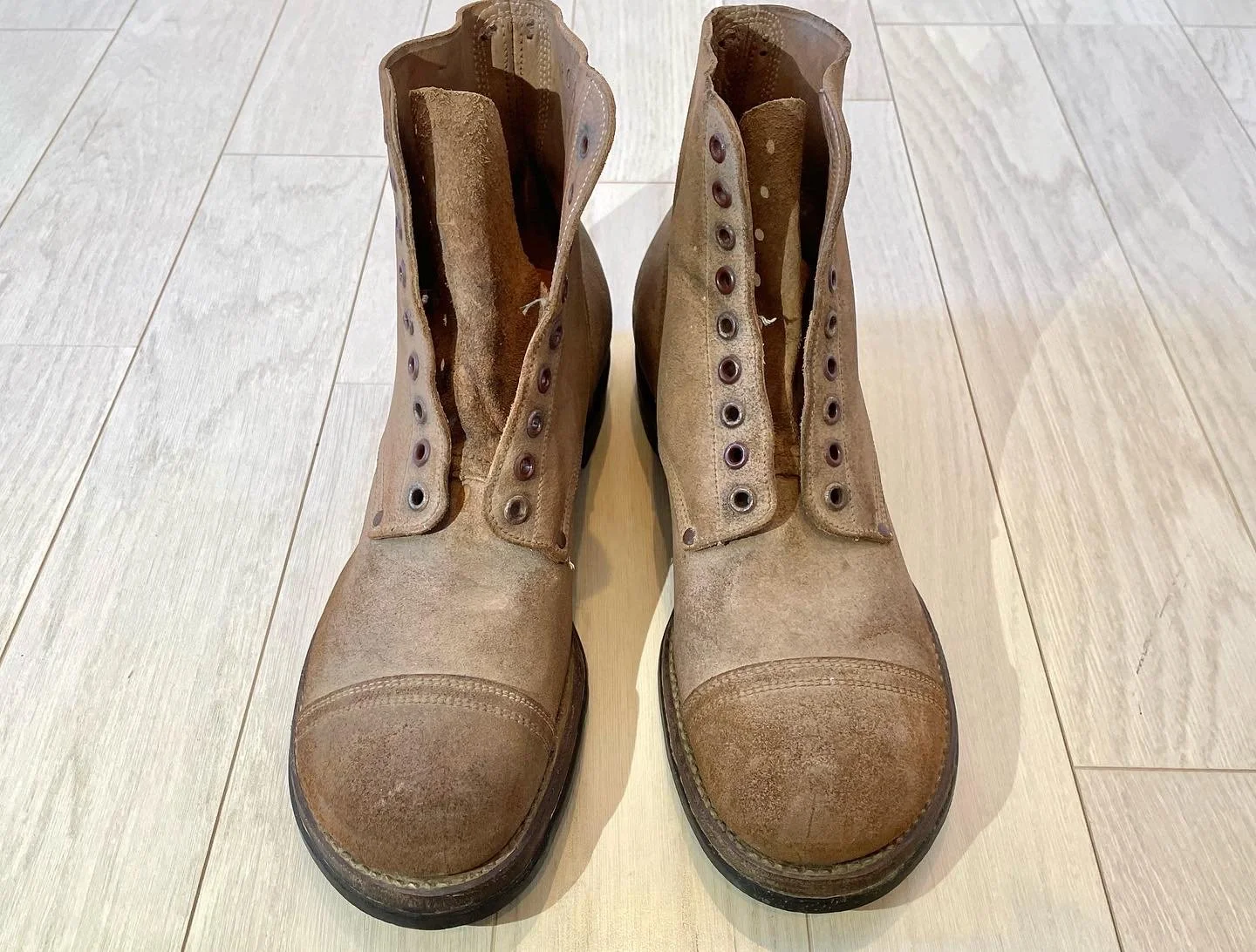
U.S. Army Service Shoe prototype, believed to represent a transitional form between Type II and Type III. The design shows features associated with the shift toward the later Type III specification.
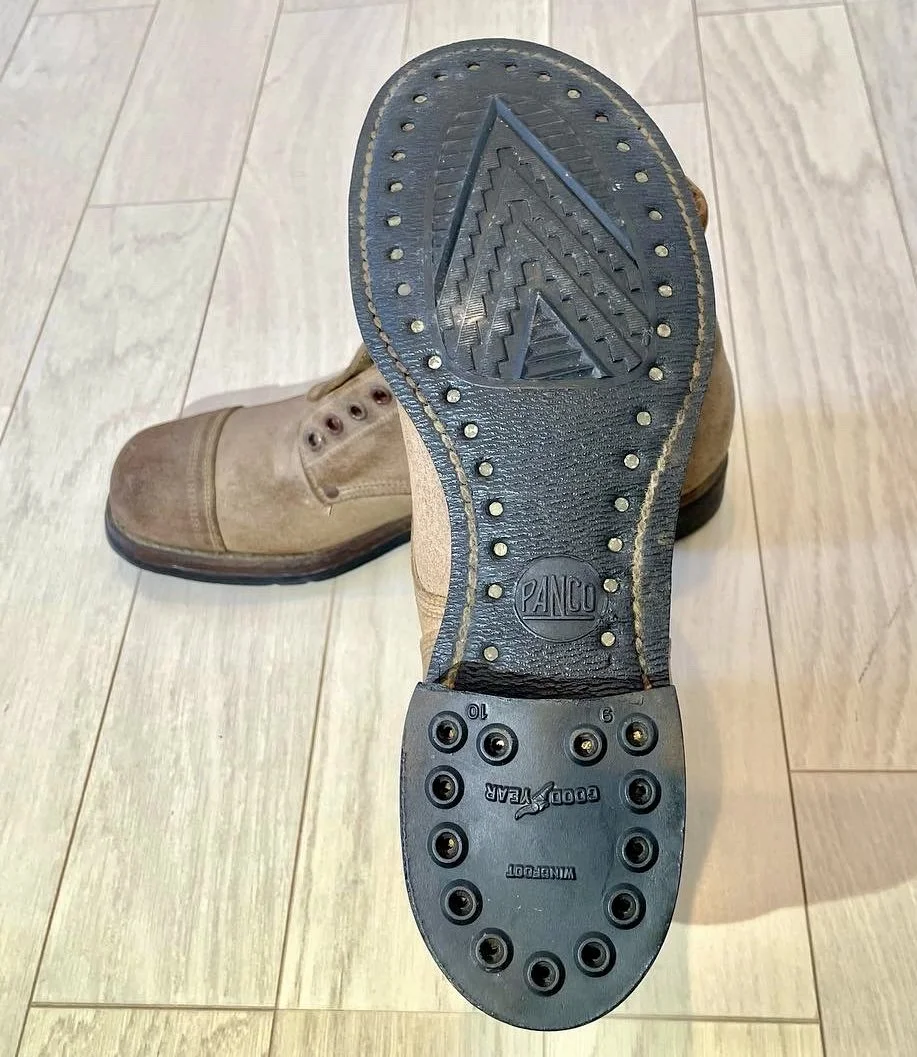
Outsole of the U.S. Army Service Shoe prototype, showing the sole pattern, fastener layout, and construction details of this transitional design.
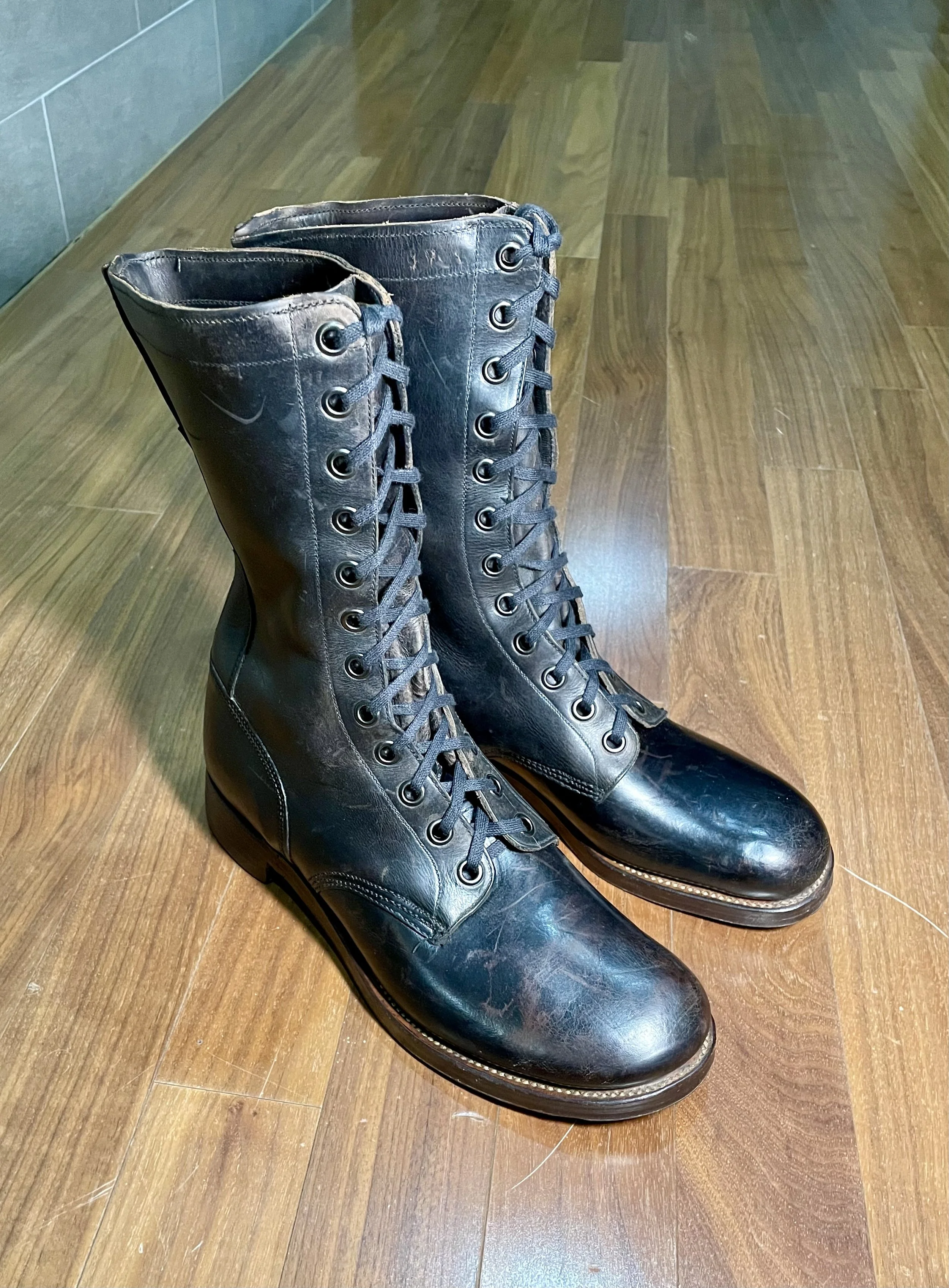
Herman U.S. Navy boot, 1938. A pre-war military boot reference showing the overall shaft height, toe shape, and restrained service-boot proportions.
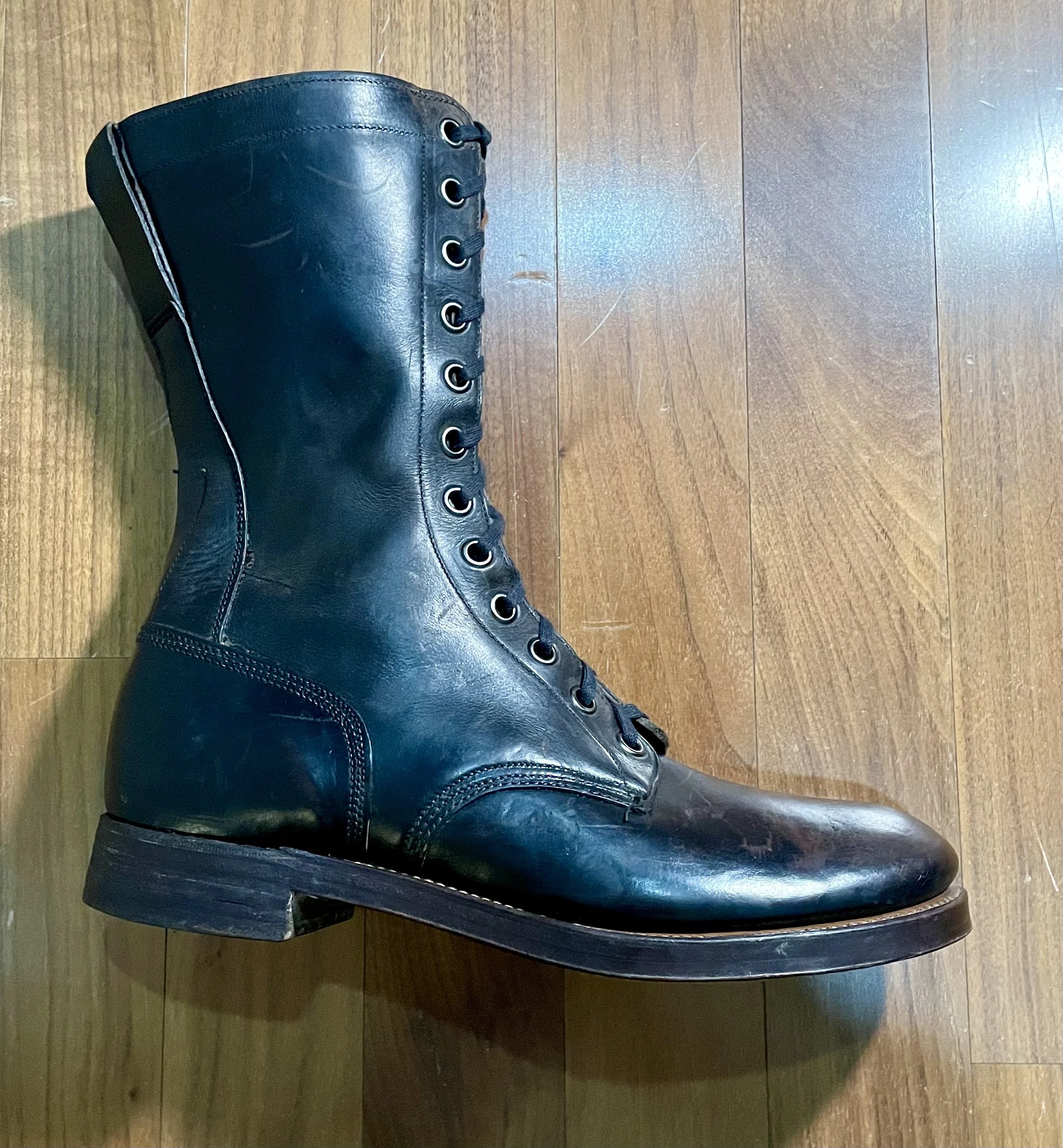
Side profile of the Herman U.S. Navy boot, 1938, showing the balance between the upper, waist, heel, and sole.
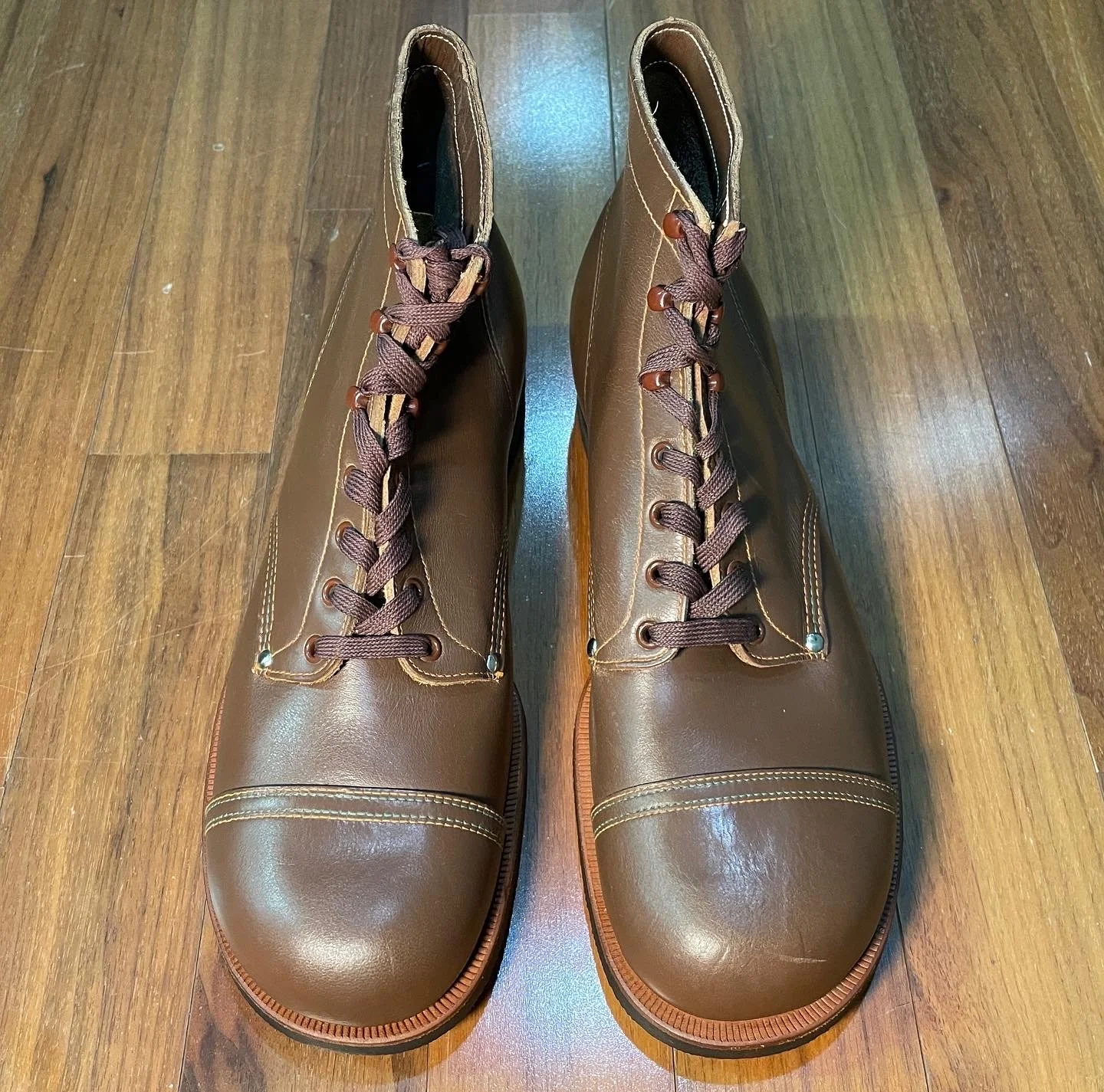
International Shoe Company Star Brand work boots, c. 1930s. A reference pair showing the cap-toe shape, riveted quarters, eyelet layout, and restrained work-boot proportions.
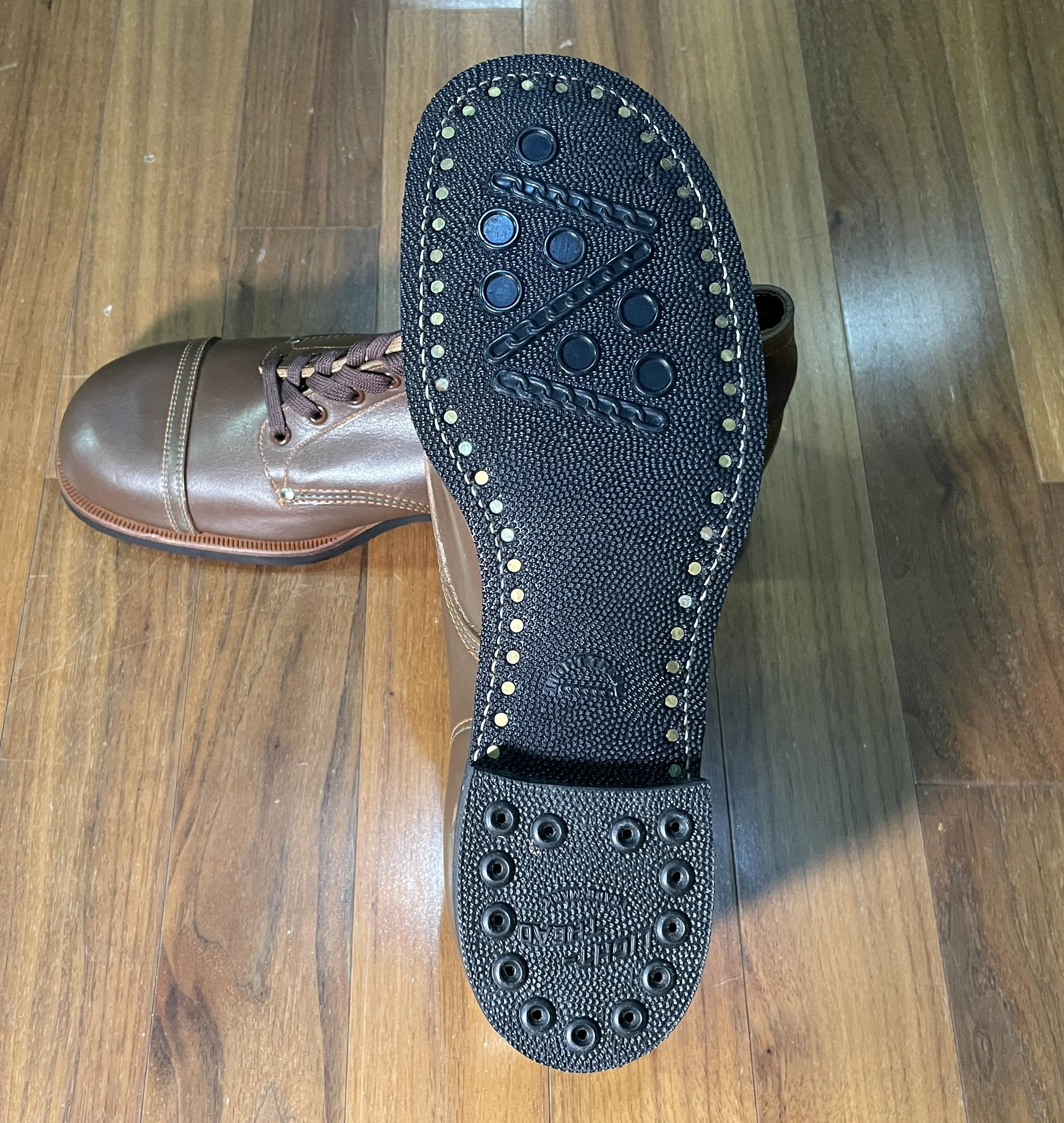
Outsole of the International Shoe Company Star Brand work boot, c. 1930s, showing the nailed sole construction, tread pattern, and heel arrangement.
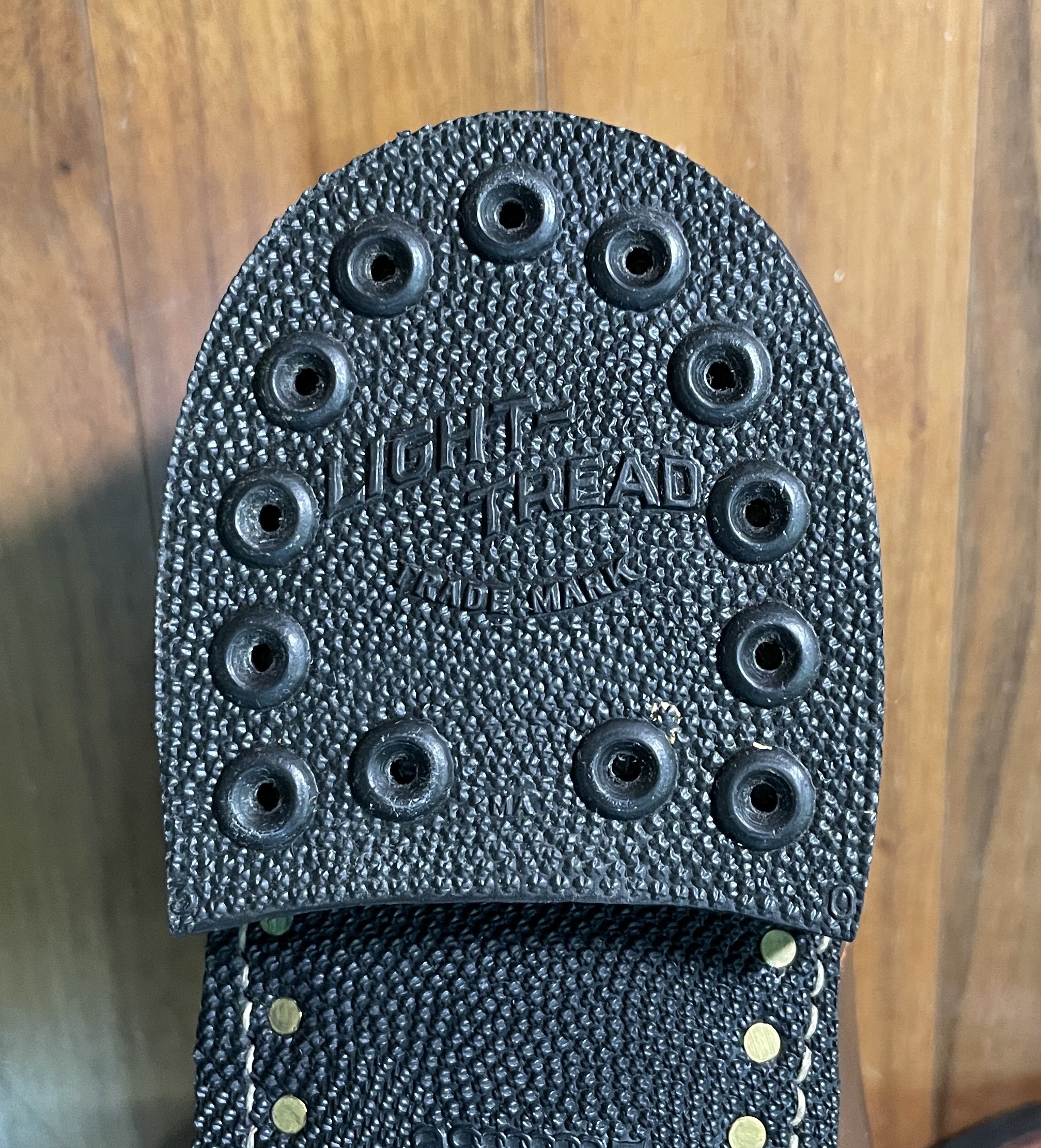
Light Tread heel detail on the International Shoe Company Star Brand work boot, showing the branded rubber heel and nail layout.
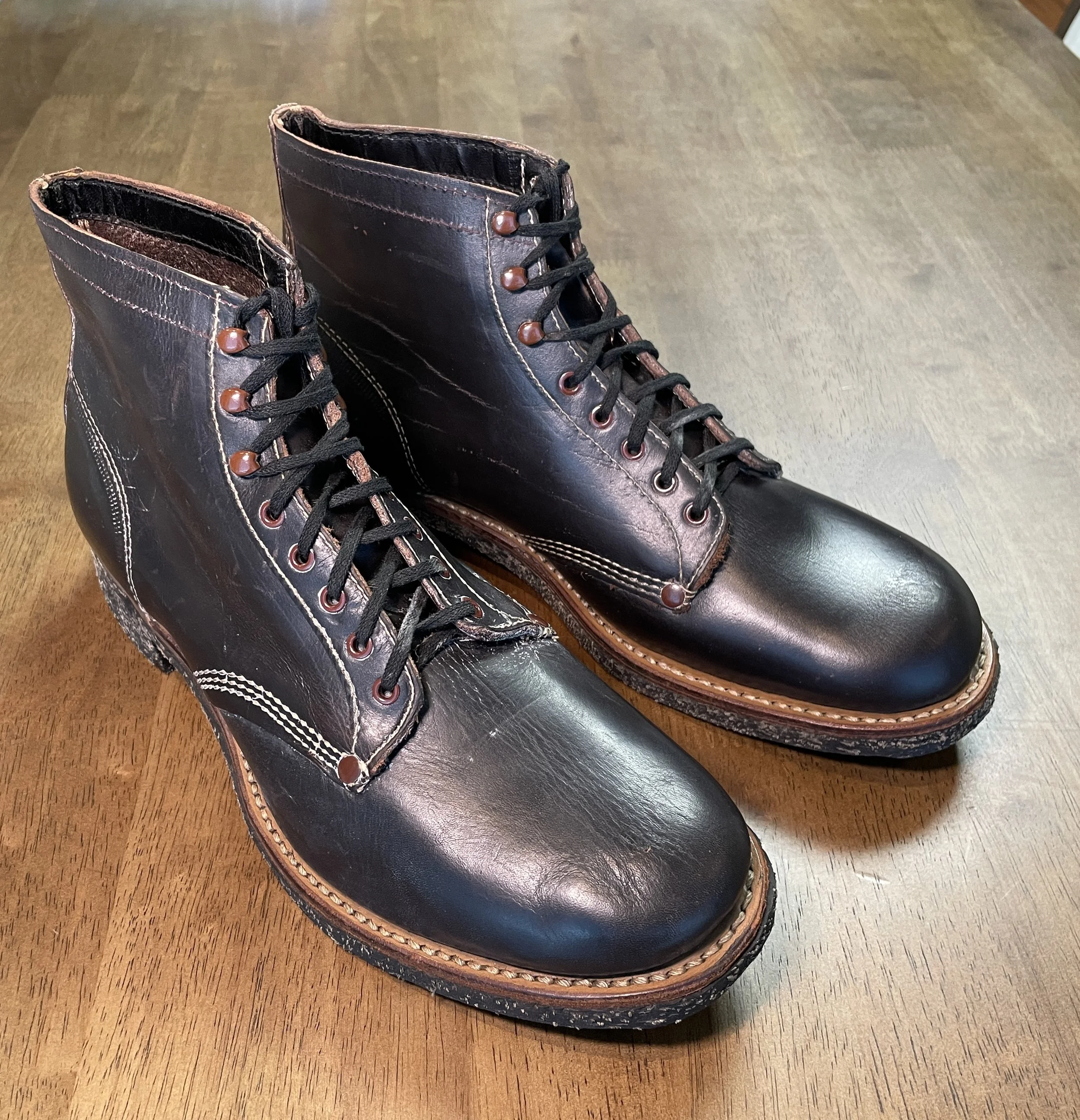
Unknown maker work boots, c. 1930s–1940s. A modest, utilitarian pair that appears to have been made as affordable work footwear, yet built with notably attractive leather and honest period construction.
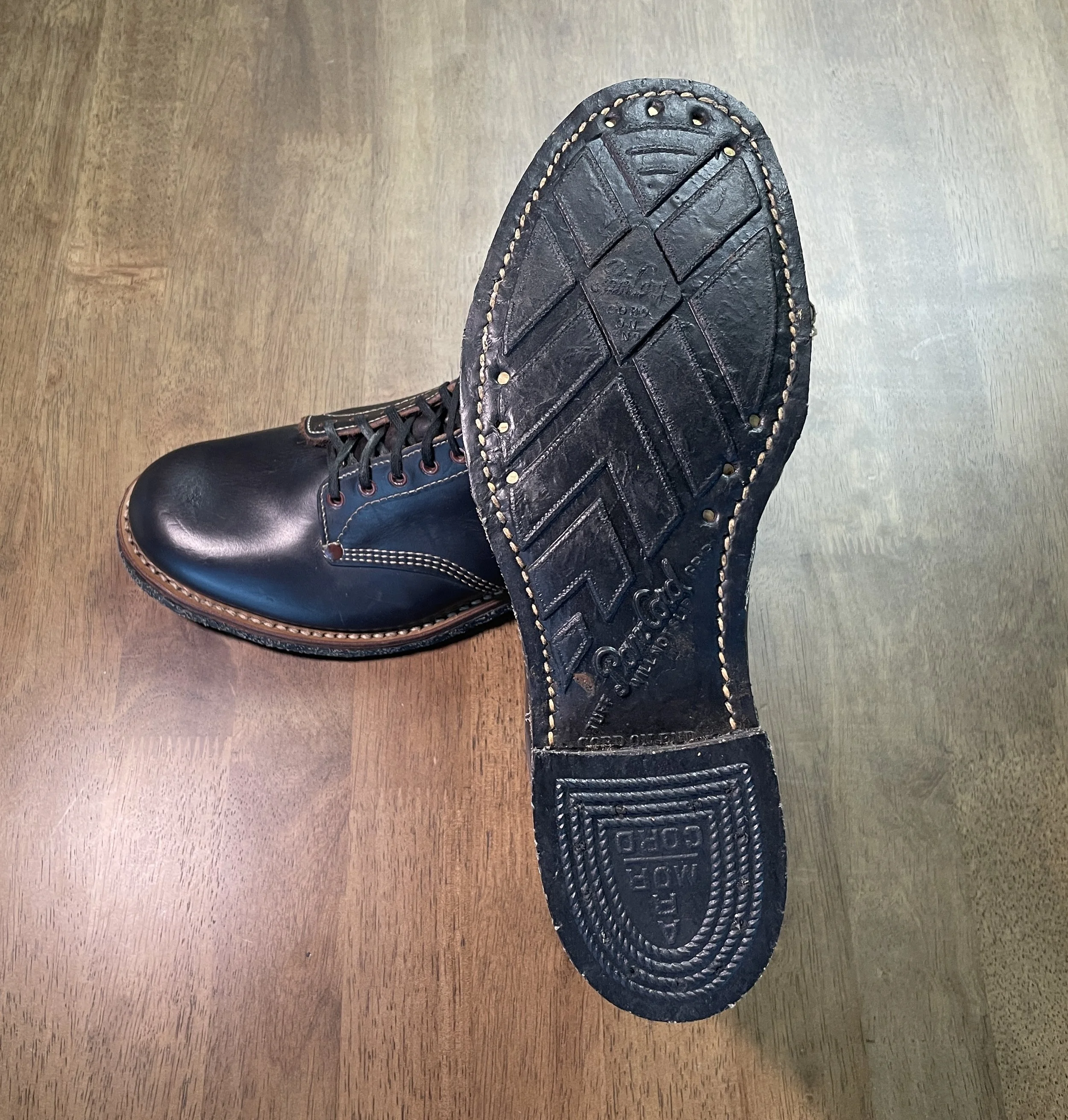
Paw Cord outsole detail on the unknown maker work boot, c. 1930s–1940s, showing the practical rubber sole pattern, nail layout, and period work-boot construction.
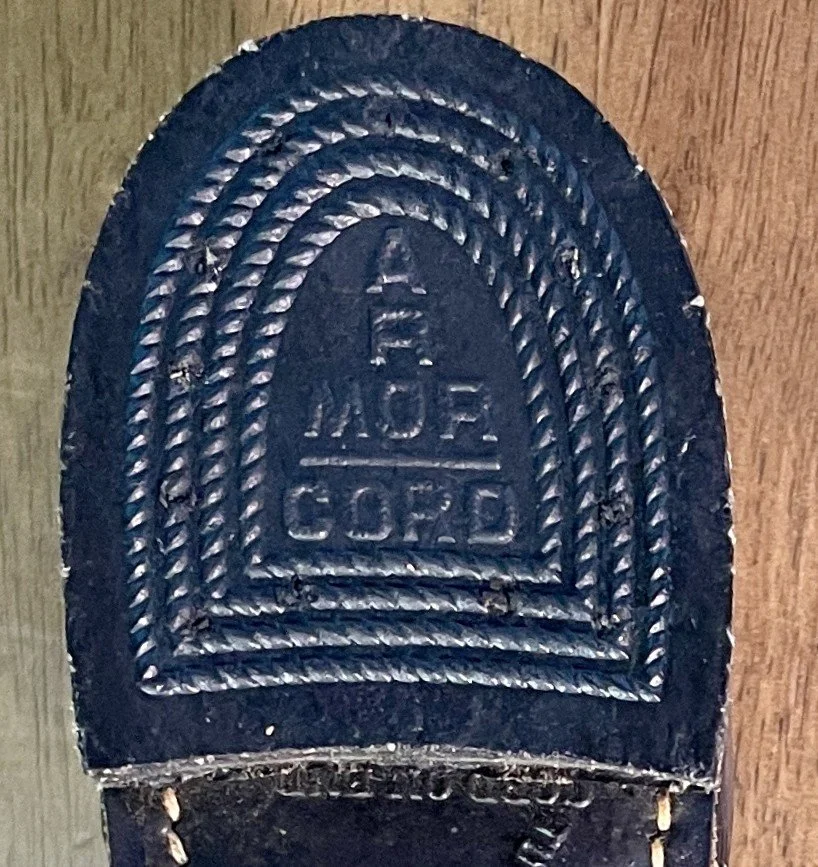
Armor Cord heel detail on the unknown maker work boot, showing the branded rubber heel and molded border pattern.
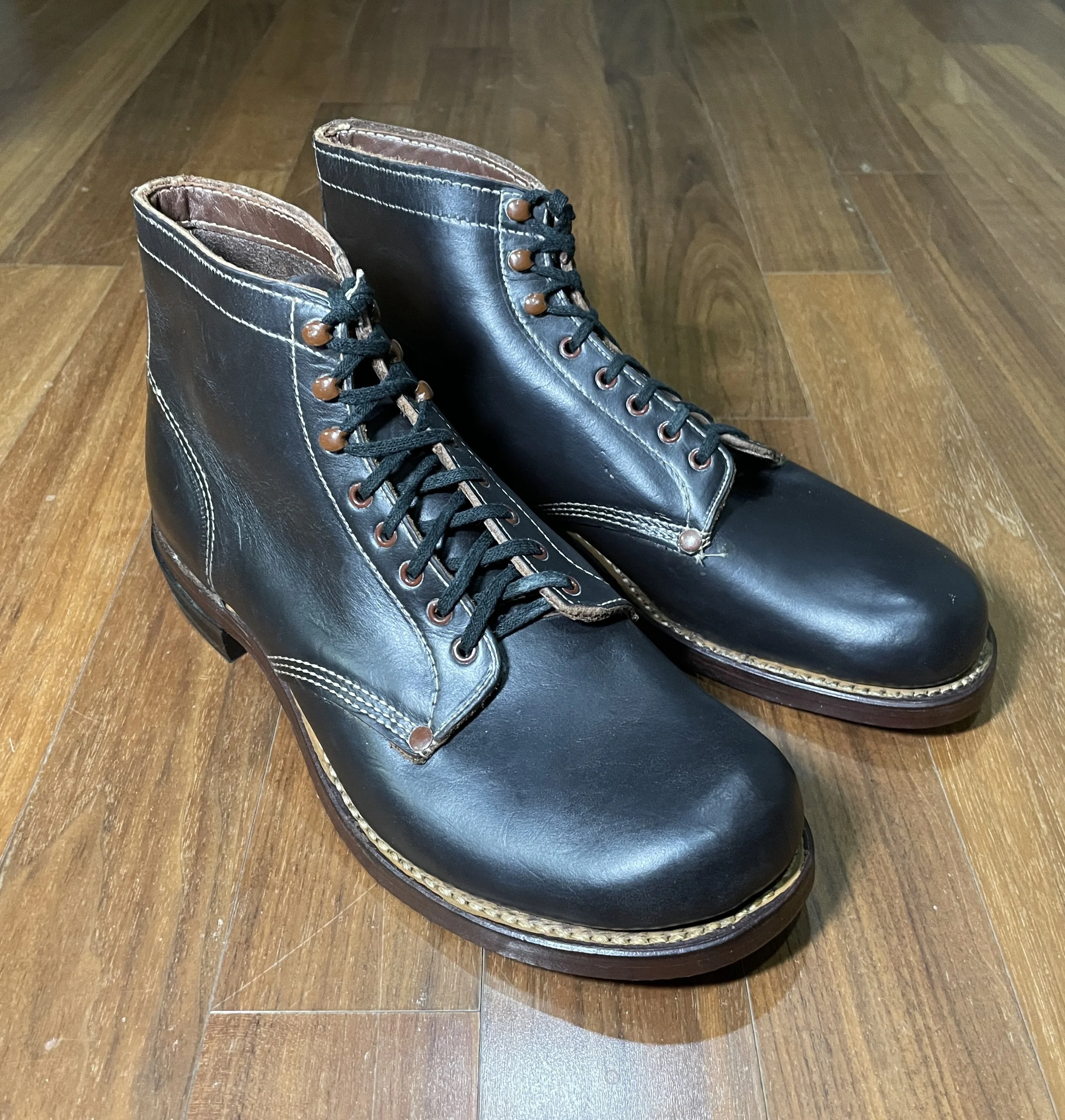
Unknown maker leather-sole work boots, c. 1930s–1940s. A plain and utilitarian pair, similar in character to the other unknown work boots in the archive, showing riveted quarters, contrast stitching, and straightforward period work-boot construction.
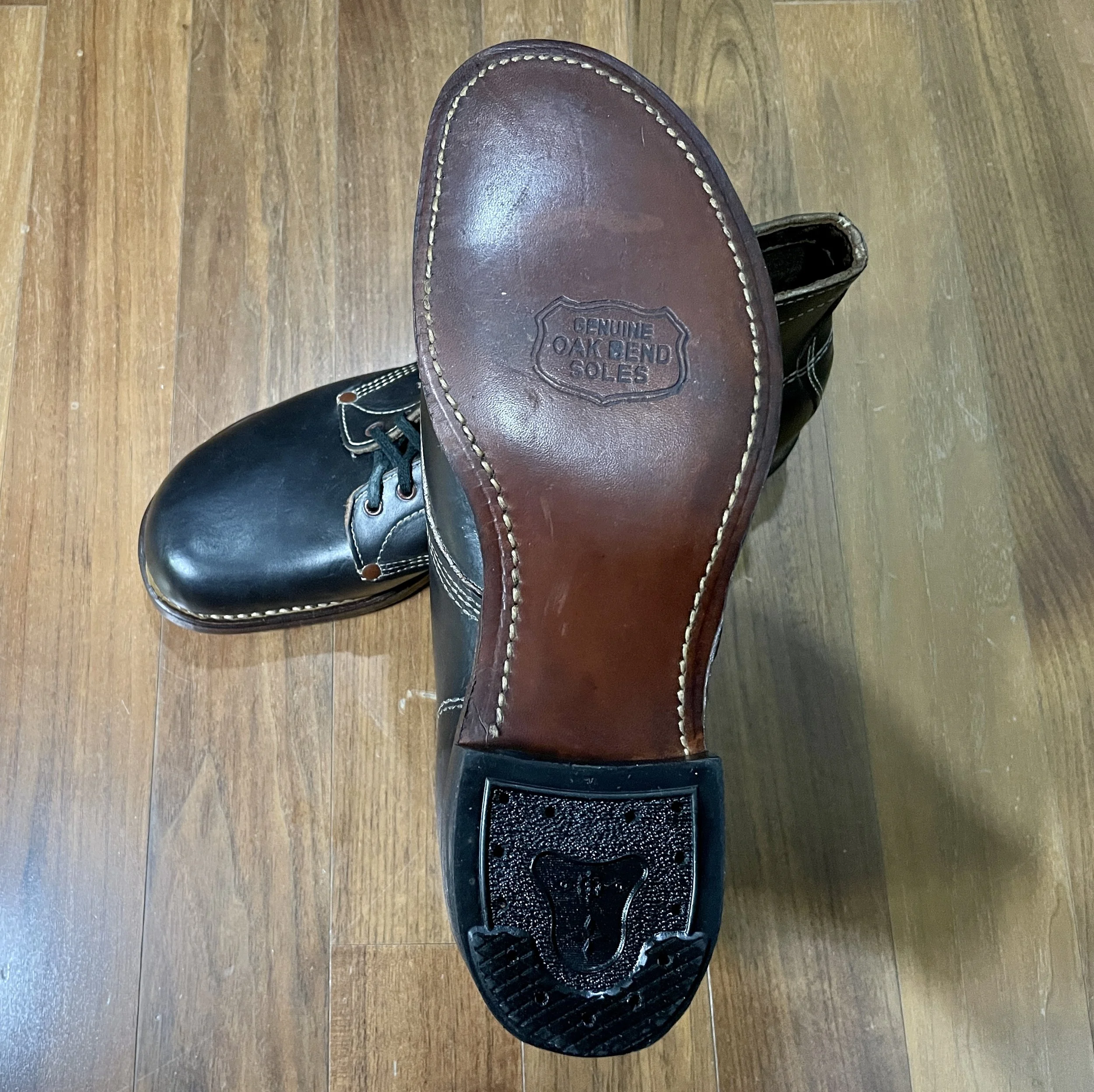
Leather outsole of the unknown maker work boot, showing the “Genuine Oak Bend Soles” marking, stitched sole edge, and practical heel construction.